Meeting one of the world’s strictest EMC requirements
RISE Research Institutes of Sweden
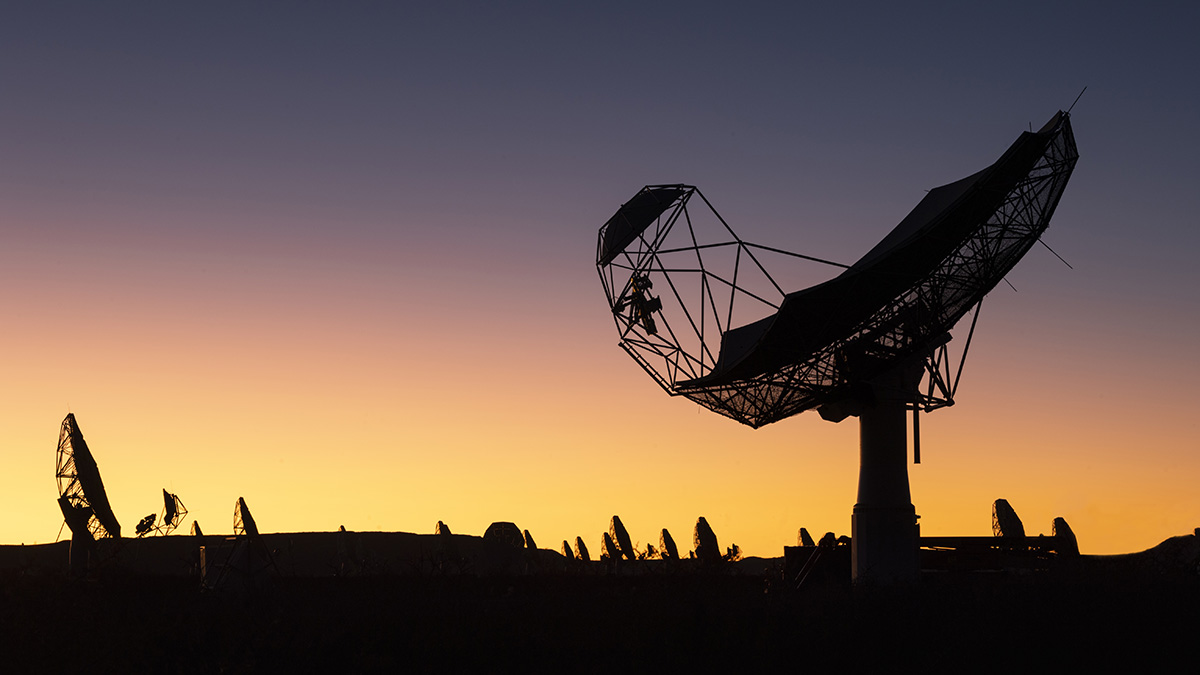
The SKA Observatory, with facilities in South Africa (SKA-Mid) and Australia (SKA-Low), is designed to detect extremely weak radio signals from the universe. Even very low levels of electromagnetic interference from nearby equipment can compromise scientific observations.
To protect the telescope’s performance, every component installed at the observatory must be carefully tested and verified to ensure that its emissions remain well below the specified limits.
This project has strengthened our expertise in advanced measurements and our collaboration with research organisations and industry.
Developing new methods for ultra-low emission measurements
RISE contributed its internationally recognised expertise in electromagnetic compatibility (EMC) and advanced measurement technology to address this challenge.
The project involved developing and validating specialised test methods capable of measuring emissions close to the background noise floor, where conventional standards are no longer sufficient. RISE optimised measurement setups, used state-of-the-art low-noise amplifiers and calibrated reference systems, and established robust testing procedures that deliver reproducible results across different laboratories and suppliers.
The methods were developed to evaluate both continuous emissions and weak pulsed signals, providing confidence that equipment can operate without interfering with the telescope’s sensitive observations.
By ensuring that equipment complies with SKAO’s strict requirements, RISE helps reduce project risks, streamline the verification process and support the reliable operation of one of the world’s most ambitious scientific facilities.
The collaboration has also strengthened RISE’s expertise in advanced EMC measurements and low-noise testing, while creating new opportunities for collaboration with international research organisations and industrial partners.
“This project has been important for further developing our expertise in advanced measurements and strengthening our collaboration with both international research organisations and industry,” says Fredrik Harrysson, Director, Safety and Transport, RISE.
Last edited 2026