Innovative HIP technology opens new opportunities at CERN
CoorsTek
When CERN needed to explore new ways of joining copper and tungsten for demanding accelerator applications, Swedish materials specialist CoorsTek Sweden contributed with a unique solution based on its proprietary glass bed Hot Isostatic Pressing (HIP) technology.
“This collaboration has shown us that our glass bed HIP technology has significant potential in advanced applications.”
The collaboration builds on an earlier AIMday project, where CoorsTek successfully demonstrated the ability to metallurgically bond copper and tungsten using its innovative glass bed process. The promising results led CERN to investigate how the same technology could be applied to more complex component designs.
Eliminating the need for costly encapsulation
Conventional HIP processing normally requires components to be enclosed in a fully gas-tight metal capsule before pressing. Designing and manufacturing such capsules is both time-consuming and expensive, while any leakage during the HIP cycle can compromise the bonding process.
CoorsTek’s proprietary glass bed technology offers an elegant alternative. Instead of using a sealed metal capsule, glass transfers the isostatic pressure to the components while preventing the pressurising gas from penetrating the bonding interface. This enables strong metallurgical bonding without encapsulation and makes it possible to process components with geometries that would otherwise be difficult or impractical to manufacture.
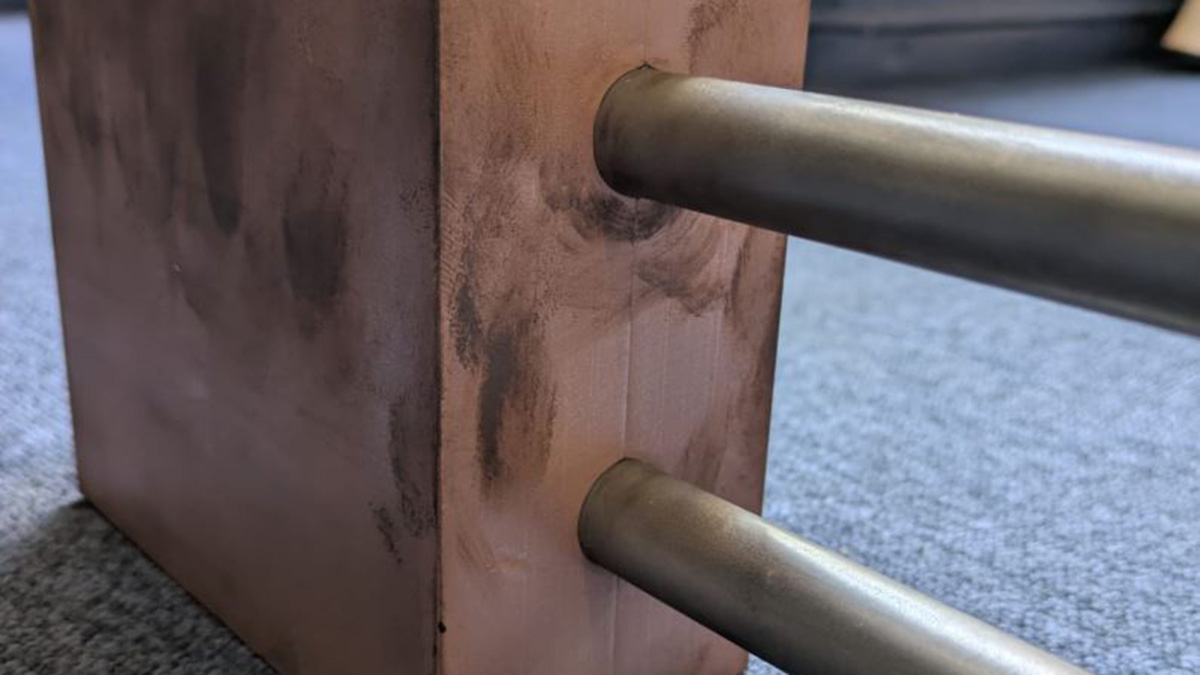
In the project, CoorsTek applied the glass bed HIP process to join copper blocks incorporating stainless steel tubing, demonstrating how the technology can simplify manufacturing while reducing both cost and technical risk.
Beyond the specific application, the collaboration provided valuable insights into how advanced joining technologies can support future accelerator components and other demanding research infrastructures.
“This collaboration has shown us that our glass bed HIP technology has significant potential in advanced applications where it has not traditionally been used. Working with CERN has been both technically rewarding and highly inspiring.” says Bernt-Ola Sandström senior researcher at CoorsTek.
Last edited 2026