Advancing sustainable cooling for Big Science
EKA and Assemblin
Swedish cooling expertise is helping international research facilities explore more sustainable alternatives to conventional cooling systems. Collaborations with CERN and GSI/FAIR show how technical dialogue can develop into joint projects, follow-up assignments and practical recommendations.
As we see it, sustainability and high performance go hand in hand. We integrate environmental considerations from the outset.
The CERN collaboration began at an AIMday Big Science Technology workshop organised by Big Science Sweden. CERN presented a challenge: how to replace ageing cooling systems using F-gases with more sustainable alternatives based on natural refrigerants.
EKA (EKAnalys) and Assemblin were selected to conduct a pre-study, combining expertise in energy analysis, refrigeration technology and sustainable engineering. Together, they surveyed CERN’s existing chillers, analysed the technical requirements and identified practical pathways towards more climate-friendly solutions.
The collaboration quickly proved its value. Even before the pre-study was completed, CERN commissioned the companies to continue the work in a follow-up assignment.
A new opportunity at GSI/FAIR
A second opportunity emerged at an AIMday organised by Big Science Sweden and Big Science Denmark in autumn 2025. GSI/FAIR presented a similar challenge involving sustainable cooling technologies for its research infrastructure.
This led to a joint pre-study by GSI/FAIR,
EKA and Assemblin. Building on experience from CERN, the companies brought their cooling expertise together with GSI/FAIR’s knowledge of its infrastructure and operational requirements.
The findings were presented at a concluding workshop held at GSI in Germany in September 2026. Experts from industry and research infrastructures explored alternatives to synthetic refrigerants and discussed the steps needed to put the proposed solutions into practice.
Turning technical findings into practical solutions
Jörgen Rogstam from EKA, Fredrik Strengbohm from Assemblin and Simone Schwarz from GSI/FAIR presented findings and technical approaches, including how lessons from CERN could inform implementation at GSI/FAIR.
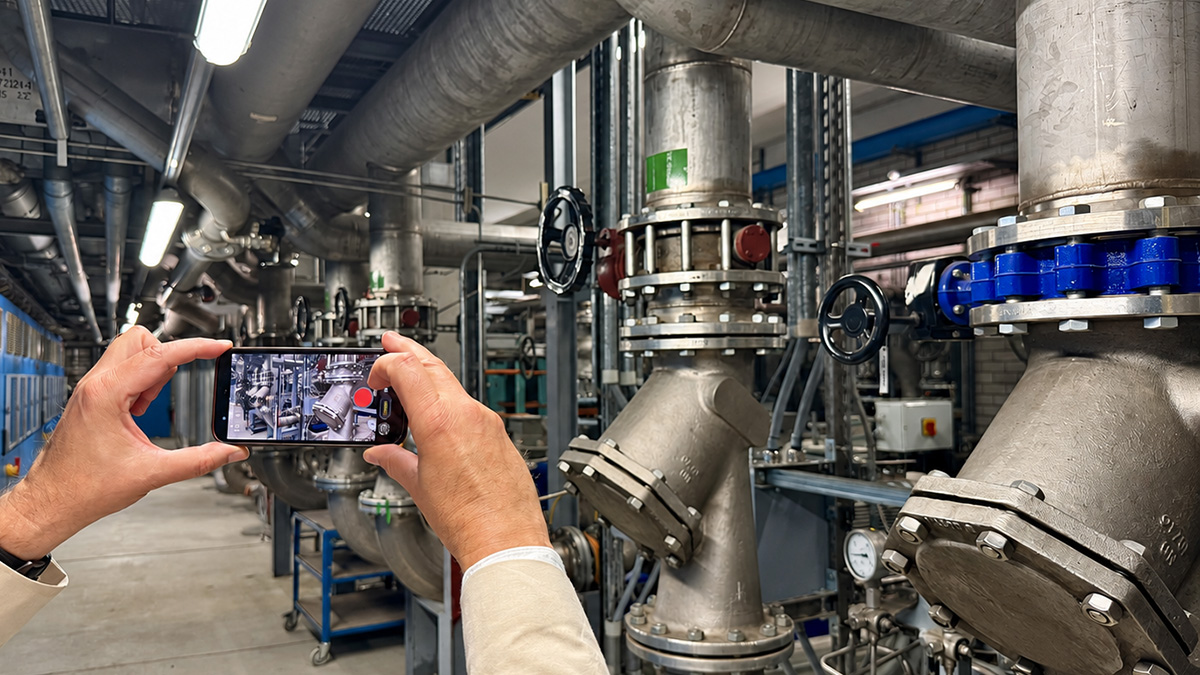
A guided visit to the cooling installations gave participants direct insight into existing systems, operational challenges and practical constraints. This helped connect the technical discussions with the conditions under which future solutions would need to operate.
A key conclusion was that natural refrigerants such as CO2, ammonia and hydrocarbons are proven alternatives. However, the transition involves more than replacing a refrigerant. Facilities need to assess their infrastructure, prioritise investments and consider cooling, heat recovery and energy use together.
The two projects demonstrate how technical dialogue can turn into concrete international business opportunities. For EKA and Assemblin, they have created opportunities for further collaboration in sustainable cooling. For CERN and GSI/FAIR, they provide access to Swedish expertise and practical recommendations to support the transition to more energy-efficient and environmentally sustainable infrastructure.
Last edited 2026